Sentry Password Protection Member Login

Student Login

Forgot? Show

Stay Logged In

My Profile

Javascript Required

Back to Tax School Homepage

Tax Topic 6 - Deductions for Taxes


In this topic we will cover the the payment of taxes you can deduct. Usually, you are able to deduct income taxes, general sales taxes, real estate taxes, personal property taxes and foreign taxes paid. You will also become aware of which taxes you can deduct and which taxes you cannot.

Student Instructions:

Print this page, work on the questions and then submit test by mailing the answer sheet or by completing quiz online.

Instructions to submit quiz online successfully: Step-by-Step check list

Answer Sheet            Quiz Online

 
Most forms are in Adobe Acrobat PDF format. Get Adobe ReaderYou will need Adobe Reader to view and print these forms. If you do not already have Adobe Reader installed on your computer, you may download the software for free.

 

Use IRS Publication 514, IRS Publication 17 page 150-155, and Schedule A Instructions on page A-2 for "Taxes You Paid" (also page A-12) to complete tax topic 6.

Complete  a Schedule A. Then, fill out Form 1040. 

Use the following expenses:


Home mortgage interest $13,000.00                                          
Real Estate Taxes $1,750.00
Personal Property Taxes (2 cars) $895.00 (this is the taxes part of the whole fee)
 

Juan Carlos is not married and has no children or other dependents.

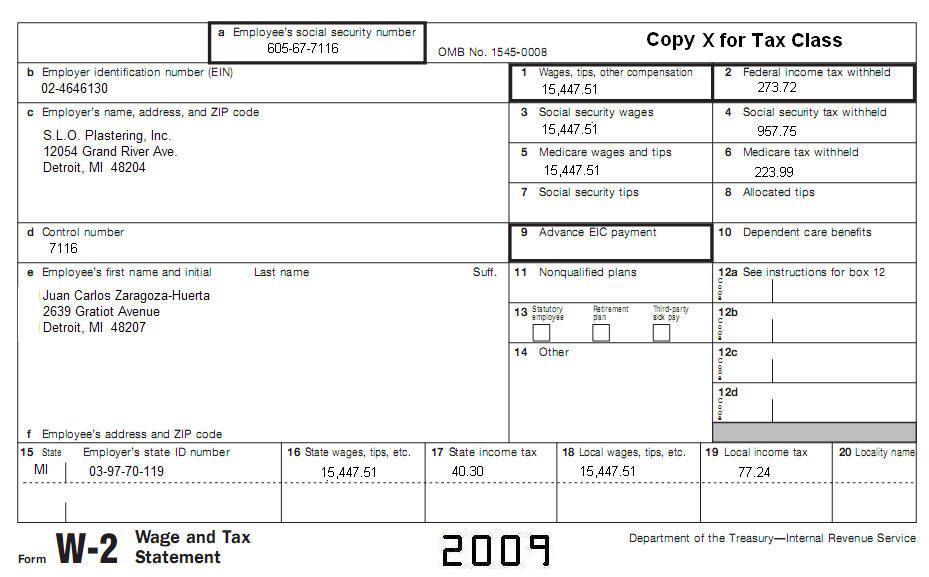
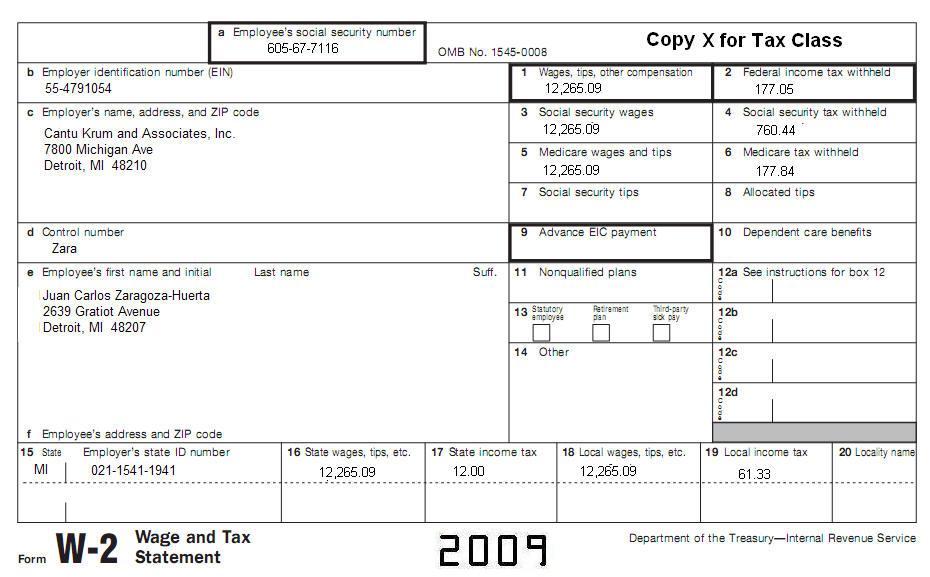
All information is current in the following W-2s, including income and address information.


1. Look at the Form 1040 you prepared for Juan Carlos. What is the amount on Form 1040, Line 40a?


A. $15,996.
B. $16,058.
C. $16,016. 
D. $15,837.

2. Look at the Form 1040 you prepared for Juan Carlos. What is the amount on Form 1040, Line 43?


A. $374.
B. $27,713.
C. $8,067. 
D. $0.

3. You can choose whether to take the amount of any qualified foreign taxes paid or accrued during the year as a foreign tax credit or as an itemized deduction. However, once the choice is made, you cannot change your choice for other tax years.

True False

4. Even if you claim a credit for other foreign taxes, you can deduct any foreign that is not allowed as a credit if

A. You paid the tax to a country for which a credit is not allowed because the U.S does not have diplomatic relations with it or recognize the government of such country.
B. You paid taxes in connection with the purchase or sale of oil or gas.
C. You paid withholding tax on income or gain (other than dividends) from property you did not hold for the required period of time.
D. Any of the above.

5. The foreign tax credit is intended to relieve you of a double tax burden when your foreign sources income is taxed by both the United States and the foreign country. The foreign tax credit can

A. Reduce U.S. taxes on U.S. source income.
B. Only reduce U.S. taxes on foreign source income.
C. Generally be less advantageous than deducting the taxes paid as itemized deductions.
D. Any of the above.

6. You can claim the credit for a qualified foreign tax in the year in which you pay it or accrue it, depending on the method of accounting. "Tax year" refers to

A. The tax year for which your U.S. return is filed.
B. The tax year for which your foreign return is filed.
C. For whichever happens first of A or B above.
D. None of the above.

7. If you receive all or part of your income or pay some or all of your expenses in foreign currency, you must

A. Not make any adjustment for any fluctuations in the value between both currencies.
B. Not include these in figuring your foreign tax itemized deduction or credit.
C. Translate the foreign currency into U.S. dollars.
D. Stamp taxes.

8. A foreign tax redetermination is any change is your foreign tax liability that may affect your U.S. foreign tax credit claimed. A redetermination of your U.S. tax liability is required if

A. The accrued taxes when paid differ from the amounts claimed as a credit.
B. The foreign taxes you paid are not refunded at all.
C. The change in foreign tax liability for each foreign country is solely attributable to exchange rate fluctuations and is less than the smaller of $10,000 or 2% of the total dollar amount of the foreign tax initially accrued for that foreign country for the U.S. tax year.
D. Any of the above.

9. The source of a foreign tax reimbursement fringe benefit is determined based on the location of the jurisdiction that imposed the tax for which you are reimbursed.

True False

10. You can deduct a limited amount of state and local sales or excise taxes you paid on the purchase of a new motor vehicle.

True False

11. An Indian tribal government that is recognized by the Secretary of the Treasury as performing substantial government functions will be treated as a

A. Separate nation for purposes of claiming a deduction for taxes.
B. Separate nation for legal purposes.
C. State for purposes of claiming a deduction for taxes.
D. Casino territory for purposes of claiming a deduction for taxes.

12. As an employee, you can deduct mandatory contributions to state benefit funds withheld from your wages that provide protection against loss of wages. Mandatory payments made to the following state benefit funds are deductible as state income taxes on Schedule A (Form 1040), except

A. Alaska Unemployment Compensation Fund.
B. Employee contributions to private or voluntary disability plans.
C. California Nonoccupational Disability Benefit Fund.
D. New York Nonoccupational Disability Benefit Fund.

13. These are taxes imposed by a foreign country or any of its political subdivisions.

A. Foreign taxes.
B. General sales taxes.
C. Income taxes.
D. Stamp taxes.

14. Generally, you can deduct only taxes that are

A. A cost-of-living allowances.
B. Exempt from federal taxes.
C. Exempt from state taxes.
D. Imposed on you.

15. Generally, you can deduct property taxes

A. Only if you are an owner of the property.
B. Of a property that your spouse owns and you are filing separately.
C. Of a property owned by your dependents.
D. Of a property owned by your family members.

16. If you are a cash basis taxpayer, you can deduct

A. Only those taxes you paid with cash.
B. Those taxes which you incurred a liability for during your tax year.
C. Only those taxes you actually paid during your tax year.
D. All of the above.

17. You cannot deduct state and local income taxes you paid on income that is exempt from federal income taxes, unless the exempt income is interest income.

True False

18. Lola made an estimated state income tax payment. The estimate of her state tax liability shows that she will get a refund of the full amount of her estimated payment. Lola had no reasonable basis to believe that she would have any additional liability for state income taxes.

A. Lola cannot deduct the estimated tax payment.
B. Lola can deduct the estimated tax payment.
C. Lola can deduct the estimated tax payment for the following year.
D. Since Lola is getting a refund for this year, she can apply the estimated payment to a prior year in which she had a liability.

19. You can deduct any part of a refund of a prior year state or local income taxes that you chose to have credited to your 2009 estimated state or local income taxes. Reduce your deduction by

A. Any state or local income tax refund (or credit) you expect to receive in 2009.
B. Any refund of (or credit for) prior-year state and local income taxes you actually received in 2009.
C. Either of A or B above.
D. None of the above.

20. If you and your spouse file joint state and local returns and  separate federal income tax returns, you can

A. Each deduct only the amount of your own state and local income taxes that you paid during the tax year.
B. Each choose who will deduct the total of state and local income taxes that you paid during the tax year.
C. Each deduct part of the total amount of state and local income taxes that you both paid during the year.
D. None of the above


Back to Tax School Homepage


Copyright © 2017 [Hera's Income Tax School]. All rights reserved.
Revised: 11/28/17